

On a dusty hillside outside Nakuru, nineteen-year-old Faith Wanjiku is doing something that Kenya’s national government has promised to do for decades she is planting trees. Not just a handful of saplings for a photo opportunity, but thousands of seedlings, carefully nurtured in a nursery she built herself from salvaged timber and plastic sheeting. In two years, Faith has helped restore four hectares of degraded land on the edge of the Mau Forest, working alongside twenty other young people who call their group Ardhi Yetu Kiswahili for Our Land.


Faith’s story is not unique. Across Kenya, from the arid lowlands of Turkana to the fertile hills of Kisii, a generation of young people is refusing to wait for someone else to fix the climate crisis. Instead, they are building solutions practical, community-rooted, and often startlingly effective with limited resources and extraordinary determination. This is the story of that generation.
We were told the environment was broken. We decided to fix it ourselves.” Faith Wanjiku, 19, Nakuru
A crisis that arrived early
Kenya is warming at approximately 0.3 degrees Celsius per decade faster than the global average. For young Kenyans who grew up in the 2000s and 2010s, climate change is not an abstraction debated in conference halls. It arrived in their childhoods: in the shrinking of Lake Turkana, in the failure of rains that their grandparents relied upon, in the encroachment of the Sahara’s southern frontier into once-productive farmland.
The Kenya Meteorological Department estimates that rainfall variability has increased by more than 20 percent since 1980, pushing millions of smallholder farmers into cycles of food insecurity. Yet out of this adversity, something remarkable has emerged. A generation that grew up with the crisis has also grown up problem-solving it — and they are doing so in ways that are reshaping what climate action looks like in East Africa.
Elizabeth Wathuti and the roots of a movement
No conversation about Kenya’s youth climate movement can begin without Elizabeth Wathuti. The founder of the Green Generation Initiative launched when she was just a university student in 2016 Wathuti has become one of the most important voices in global climate advocacy. But her work is grounded in something deceptively simple: planting trees and teaching children to love them.
The Green Generation Initiative has facilitated the planting of more than 30,000 trees across Kenya, working with schools, communities, and local governments. More importantly, it has trained thousands of young people to see themselves as environmental stewards rather than environmental victims. At the COP26 climate summit in Glasgow in 2021, Wathuti delivered a speech that moved world leaders to tears a two-minute address about the children of Kenya who are already watching their harvests fail.

But Wathuti is quick to redirect attention from herself to the hundreds of young Kenyans doing the quiet work of restoration. ‘The movement is not about one person,’ she has said. ‘It is about the child who plants a tree in her school compound and then goes home and tells her mother why it matters.’ That philosophy of distributed, community-centred action is what distinguishes Kenya’s youth climate movement from the performance of activism. This is solutions journalism at its most alive.
“The movement is not about one person. It is about the child who plants a tree in her school compound.” Elizabeth Wathuti, Green Generation Initiative
Solar by the shore: energy innovation in Lamu
Head east to the Indian Ocean coast and you find a different kind of youth-led climate solution taking shape. In the ancient island town of Lamu a UNESCO World Heritage Site threatened by rising sea levels and intensifying cyclone seasons a group of young engineers and entrepreneurs have launched a solar micro-grid cooperative that now powers more than 150 households.
The project, called Jua Nguvu (Swahili for Solar Power), was founded by three graduates of the Technical University of Mombasa who returned home after their studies determined to address Lamu’s chronic energy poverty. Before Jua Nguvu, most households on the island’s poorer mainland districts relied on kerosene lamps and diesel generators expensive, polluting, and vulnerable to fuel supply disruptions.
Today, the cooperative generates enough solar energy to power homes, a health clinic, and a small fish-drying facility that has extended the shelf life of the local catch reducing food waste while increasing fisher incomes. The model is now being studied by Kenya’s Rural Electrification Authority as a potential template for off-grid coastal communities across the country.
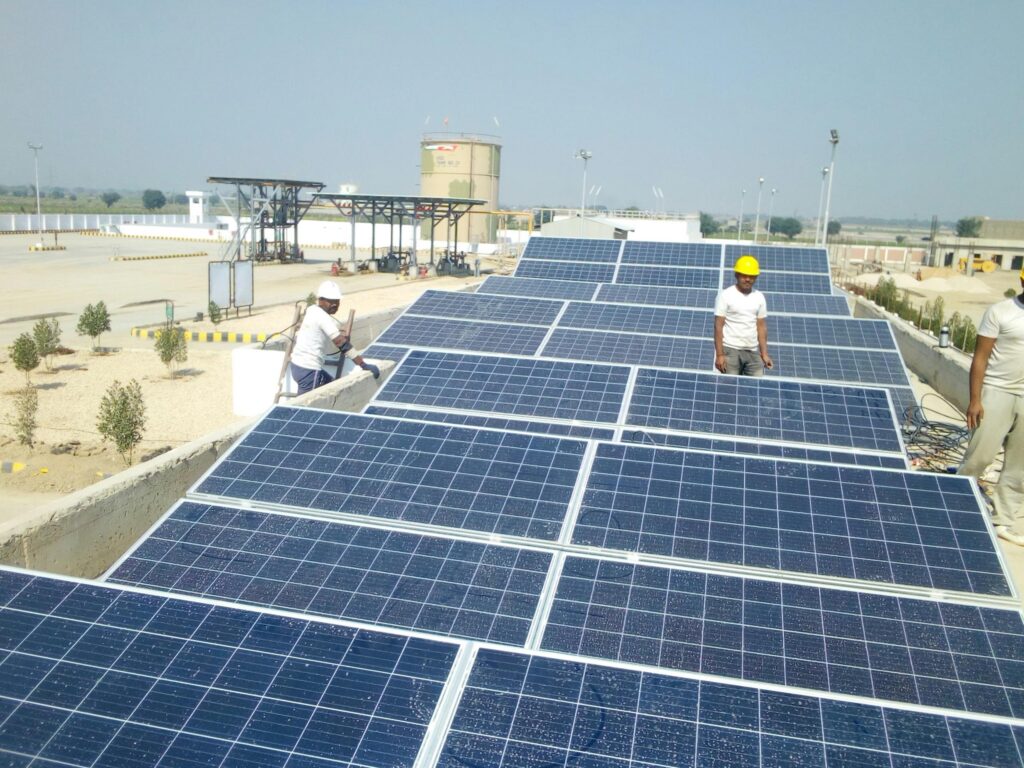
‘We did not wait for the government to electrify us,’ says co-founder David Mwangi, 27. ‘We looked at what we had sun, sea, and skills and we built something.’
What needs to happen next
The youth climate movement in Kenya has enormous momentum, but it operates against structural headwinds. Access to finance remains the single biggest barrier for young environmental entrepreneurs. The Green Climate Fund, the African Development Bank, and Kenya’s own climate finance mechanisms remain largely inaccessible to small community organisations without the administrative infrastructure to navigate complex application processes.
Policy alignment is also critical. Kenya’s Climate Change Act of 2016 and its updated Nationally Determined Contribution under the Paris Agreement contain ambitious targets, but implementation has been slow and underfunded. Young Kenyans are doing the work that policy promises but they deserve the resourcing and recognition that would allow them to do it at scale.

Finally, the world needs to listen to these voices not as symbols of suffering, but as architects of solutions. When Elizabeth Wathuti speaks at COP, she is not asking for sympathy. She is offering a model. The international climate community would do well to pay attention.
About the author
This blog is written by an environmental journalist based in Nairobi, Kenya, specialising in solutions-based climate reporting. Covering the work of Africa’s leading climate activists and innovators, with a focus on the positive, community-driven responses to Kenya’s environmental challenges.
Tags: Kenya, climate solutions, youth activism, Elizabeth Wathuti, regenerative agriculture, solar energy, urban greening, solutions journalism